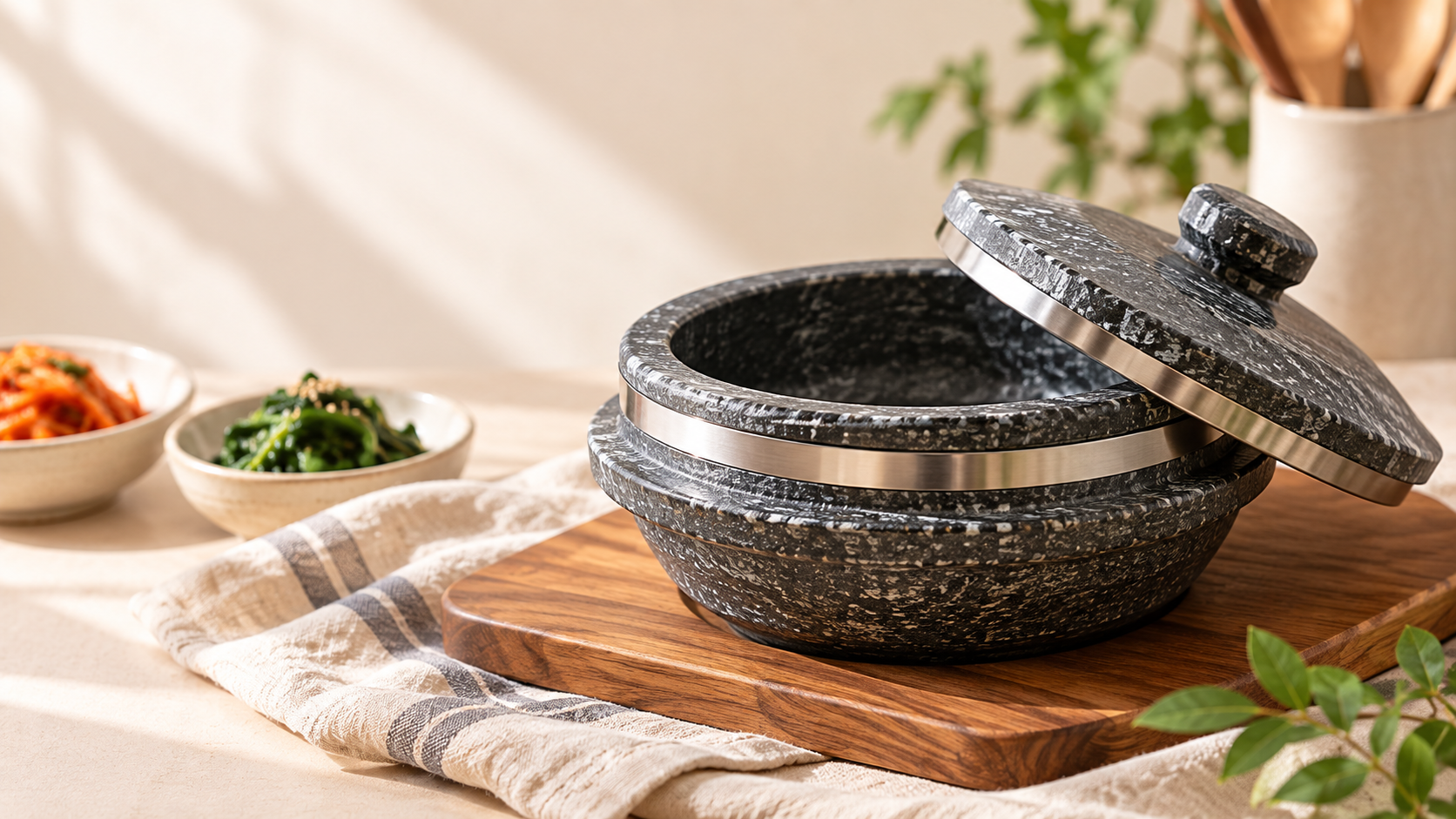
A Korean stone pot, commonly known as dolsot (돌솥), retains heat exceptionally well and is perfect for dishes such as dolsot bibimbap, hot rice, soups, and stews.
Before using your new Korean stone pot for the first time, follow these simple preparation and care steps to help keep your pot in good condition.
Boil → Cool Down → Apply Oil → Clean → Dry & Store
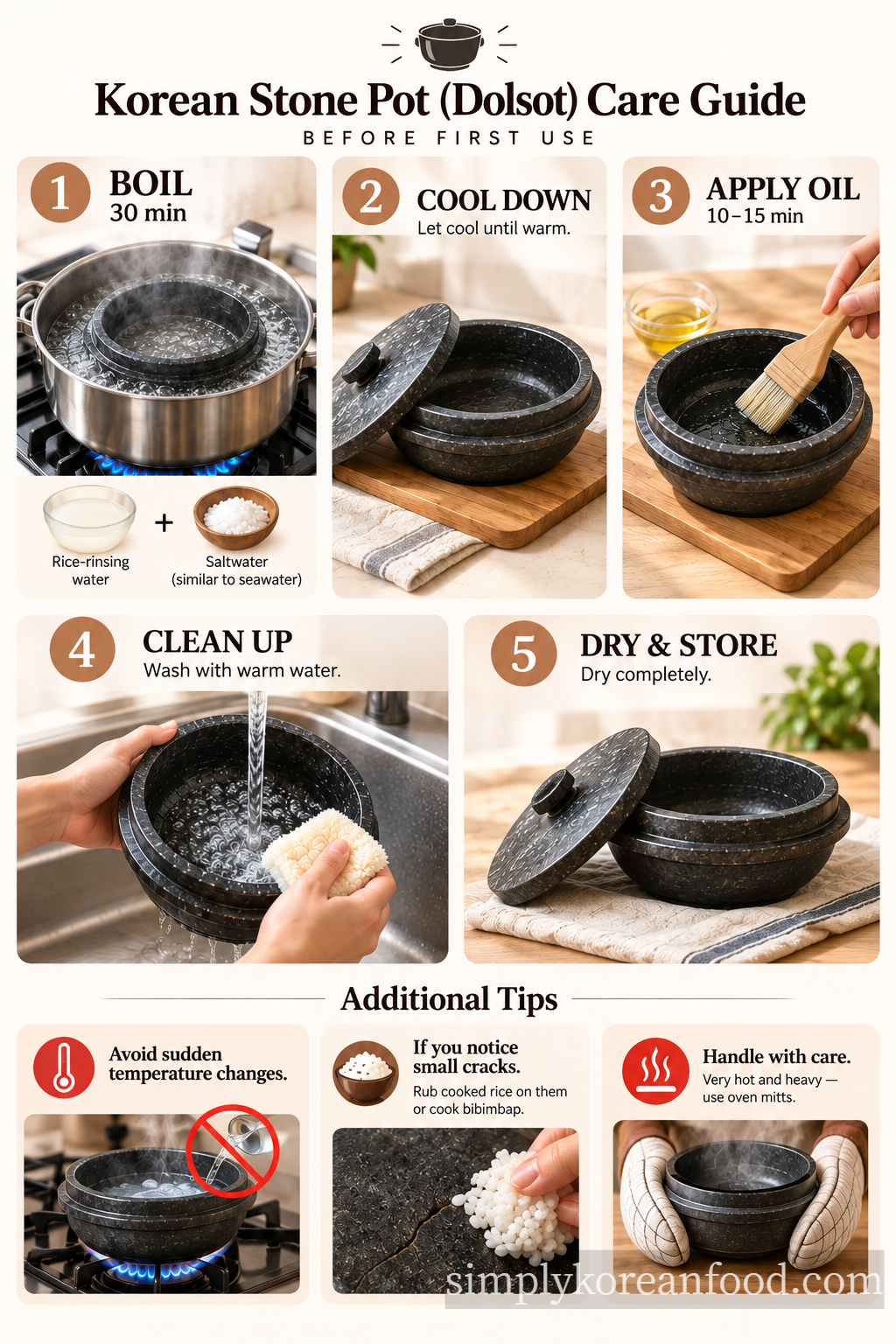
1. Boil the Stone Pot for 30 Minutes
Fill a large pot with a mixture of rice-rinsing water and saltwater with a concentration similar to seawater.
Gently place your stone pot into the water.
Turn the heat to medium and gradually bring the water to a boil. Once boiling, continue to boil the stone pot for approximately 30 minutes.
Rice-rinsing water is the cloudy water produced when rinsing uncooked rice and is traditionally used when preparing Korean stone cookware.
2. Let the Stone Pot Cool Down
Carefully remove the stone pot from the hot water and allow it to cool naturally until warm.
Stone retains heat very well, so the pot may remain hot much longer than expected.
3. Apply Cooking Oil
While the stone pot is still warm, spread a thin layer of cooking oil over the stone pot.
Leave the oil on for approximately 10–15 minutes.
This is part of the initial preparation process before using your new Korean stone pot for cooking.
4. Clean the Stone Pot
Wash the pot thoroughly with warm water.
If possible, avoid using kitchen detergent during the initial stages of use.
Clean it gently and avoid harsh or highly abrasive scrubbers that may damage the surface.
If food becomes stuck to the pot after cooking, allow the pot to cool first and soak it in warm water before gently cleaning it.
5. Dry Completely & Store
After washing, allow your dolsot to dry completely.
Once dry, store it in a well-ventilated place.
Do not store the stone pot while moisture remains inside. If your pot has a lid, allowing the pot and lid to dry separately before storage is a good practice.
Important Korean Stone Pot Care Tips
Avoid Sudden Temperature Changes
One of the most important things to remember when using stone cookware is to avoid thermal shock.
Before use, soak the stone pot in warm water and avoid sudden temperature changes.
- Do not take a very cold stone pot and immediately expose it to high heat.
- Do not pour cold water into a very hot stone pot.
- Allow the pot to cool naturally before washing.
- Handle the pot carefully when moving it between different temperatures.
Gradual heating and cooling can help protect your stone pot.
What If You Notice Small Cracks?
Small surface cracks may occasionally appear in natural stone cookware after repeated heating and cooling.
Traditionally, if you notice a very small crack, cooked rice can be gently rubbed over the area, or rice-based dishes such as bibimbap can be cooked in the pot. Cooked rice and other food ingredients may enter very small gaps.
Handle Your Stone Pot With Care
Even a relatively small Korean stone pot can be surprisingly heavy.
Always handle it carefully and avoid dropping or striking it against hard surfaces. Natural stone cookware may chip or break when subjected to a strong impact.
How to Clean a Dolsot After Cooking
After cooking, allow your Korean stone pot to cool naturally.
- Wash or soak it with warm water.
- Gently remove any food residue.
- Avoid sudden temperature changes.
- Rinse thoroughly.
- Allow it to dry completely before storing.
If rice is stuck to the bottom, soaking the cooled pot in warm water will usually make it easier to clean.
Why Cook With a Korean Stone Pot?
A traditional Korean stone pot retains heat for a long time, which makes it especially suitable for dishes that are meant to stay hot at the table.
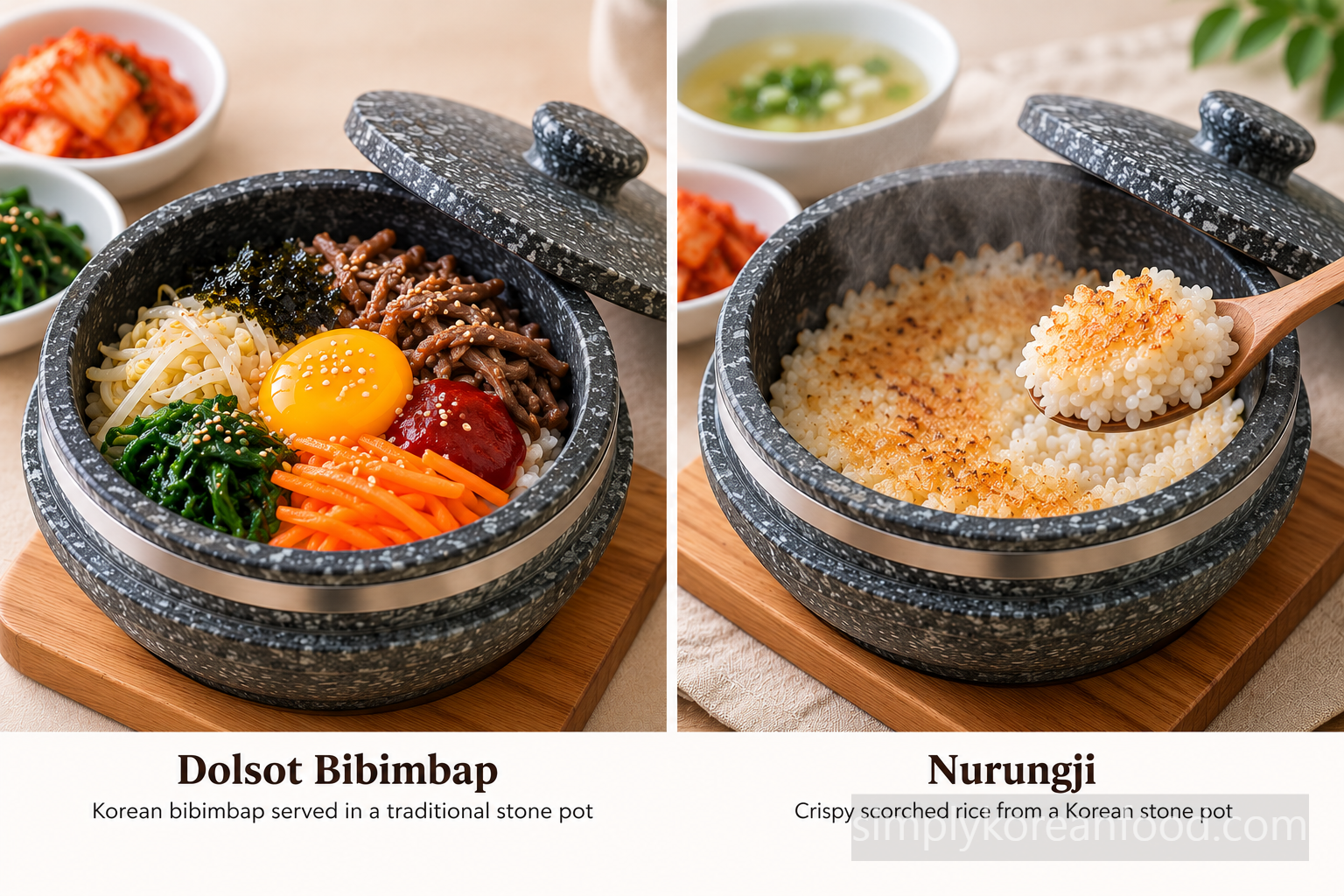
One of the best-known dishes is dolsot bibimbap, where rice and toppings are served in a heated stone pot. The hot surface can create the crispy layer of rice at the bottom known in Korean as nurungji (누룽지).
Stone pots can also be used for hot rice and a variety of Korean soups and stews, depending on the type of pot.
Because stone cookware continues to retain heat after being removed from the heat source, remember that both the pot and its contents may remain hot for quite some time.
Natural Variations Are Normal
Korean stone pots are made from natural stone, so no two pieces will necessarily look exactly the same.
Slight differences in color, stone pattern, texture, dimensions, weight, and surface appearance can occur.
These variations are a natural characteristic of stone cookware and do not necessarily indicate a defect.
Enjoy Your Korean Stone Pot
Preparing your Korean stone pot properly before its first use and taking care to avoid sudden temperature changes can help you enjoy it for many Korean meals.
Boil → Cool Down → Apply Oil → Clean → Dry & Store
With proper care, your dolsot is ready for delicious Korean cooking at home.
Enjoy your Korean cooking!


